Shipbuilding Steel Plate
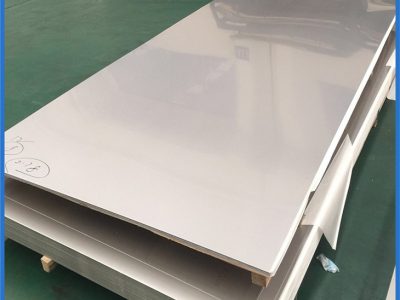
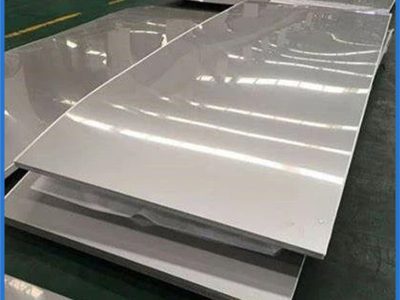
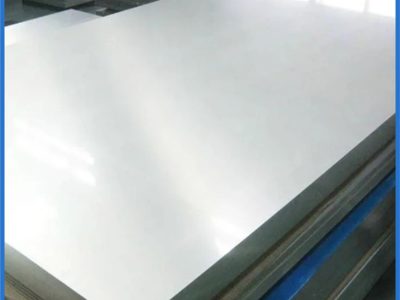
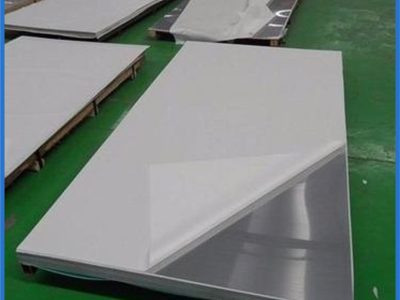
Shipbuilding steel plates are large plates used in shipbuilding components production because they provide superior corrosion resistance and excellent welding performance.
Product Introduction
What Is Shipbuilding Steel Plate?
Shipbuilding steel plates are large plates used in shipbuilding components production because they provide superior corrosion resistance and excellent welding performance. These plates have high tensile strength, excellent fatigue properties, and exceptional durability. Shipbuilding steel plates are also known for their toughness and ability to resist low temperatures without losing strength. High-quality shipbuilding steel plate provides a lightweight solution for improved efficiency during manufacturing. This cost-effective material is perfect for creating efficient ship designs with improved payload capacity and increased seaworthiness in harsh marine environments.
Corrosion resistance
Shipbuilding steel plates are typically made from specialized steel grades designed to withstand corrosion in marine environments. Such steels’ primary alloying elements and chemical composition must be carefully balanced to ensure resistance against the corrosive environment. For example, shipbuilding steels may contain higher amounts of chromium, nickel, and molybdenum than other low-alloy steels to offer greater protection against corrosion. Furthermore, plates may have their surfaces treated with special coatings or anodization processes which can help reduce exposure to seawater and moisture. Adopting a proper maintenance plan is also essential for ensuring consistent corrosion resistance, as any damage could lead to accelerated oxidation in the marine atmosphere.
High tensile strength
Shipbuilding steel plates are specifically designed for shipbuilding and offer the best combination of high tensile strength, abrasion resistance, toughness and weldability. The plates are made from alloy, carbon, and weathering steel to provide corrosion resistance and excellent mechanical properties even in extreme conditions. Shipbuilding steel plates have been tested to withstand temperatures up to 800 degrees celsius while maintaining superior mechanical properties. Furthermore, these plates also feature good formability characteristics, making them ideal for welding applications and providing superior corrosion protection, making them especially suitable for marine applications.
Weldability
Shipbuilding steel plates are designed to be easily welded, providing flexibility in the ship’s construction process. The ease of welding saves time, reduces labour costs, and adds longevity to the ship’s lifecycle.
Completed ship testing
To avoid marine disasters, international organizations such as the international maritime organization have established safety standards for the construction of commercial ships. The compliance process includes rigorous testing of completed ships, including testing steel materials. Using shipbuilding steel plates that comply with safety standards ensures the vessel’s durability, safety, and seaworthiness.
Cost-effective
Shipbuilding steel plates provide a cost-effective solution to ship construction due to their durability and longevity. Steel plates are also recyclable, making them environmentally friendly. Additionally, quick and easy replacement of individual plates during routine maintenance can help reduce the vessel’s downtime, ultimately leading to cost savings for the ship owner.
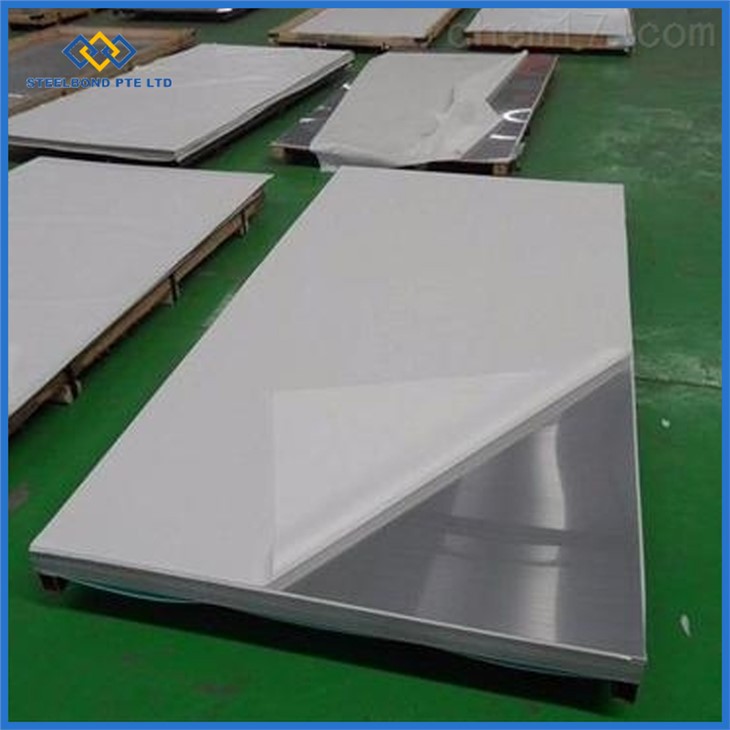
Carbon steel plate usually been considered as the steel that does not contain much alloy steel elements. Generally, elements are C, Mn, P, S, Si, besides these there are no minimum limits for elements of Al, Cr, Ni, Mo, V etc.
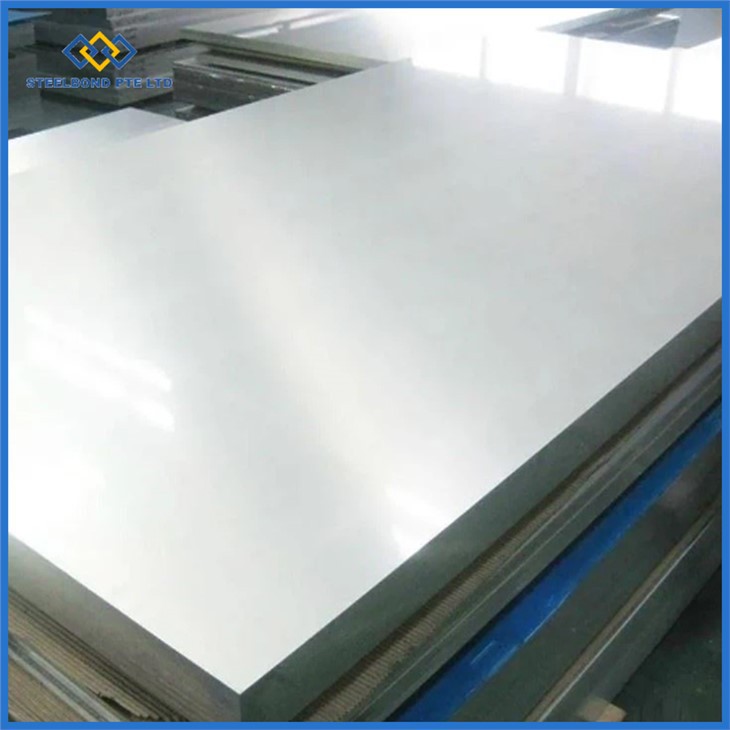
Pressure vessels are defined as closed containers that hold gases or liquids at a pressure substantially different than the ambient pressure.
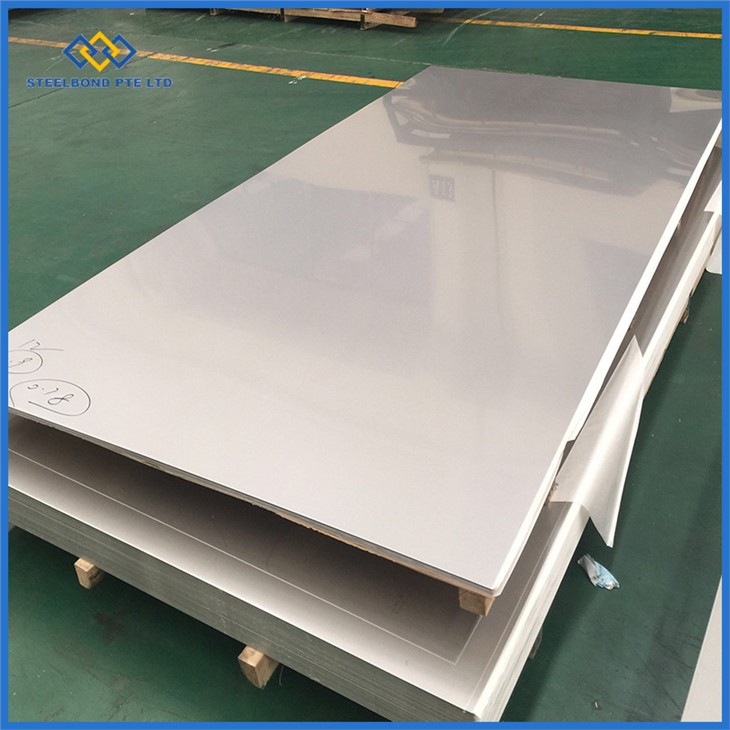
Offshore and marine steel plate is specifically certified for use in maritime projects by regulatory organizations, including the American Bureau of Shipbuilding (ABS).
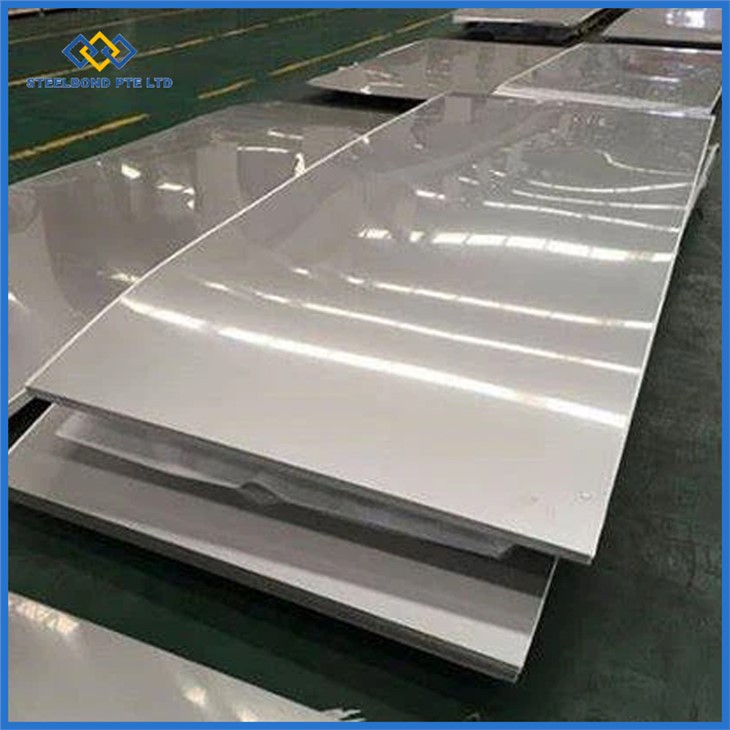
High Strength Steel Plate is a material used to make several products from plates to sheets. The properties inherent by these plates depend upon the elements added to them.
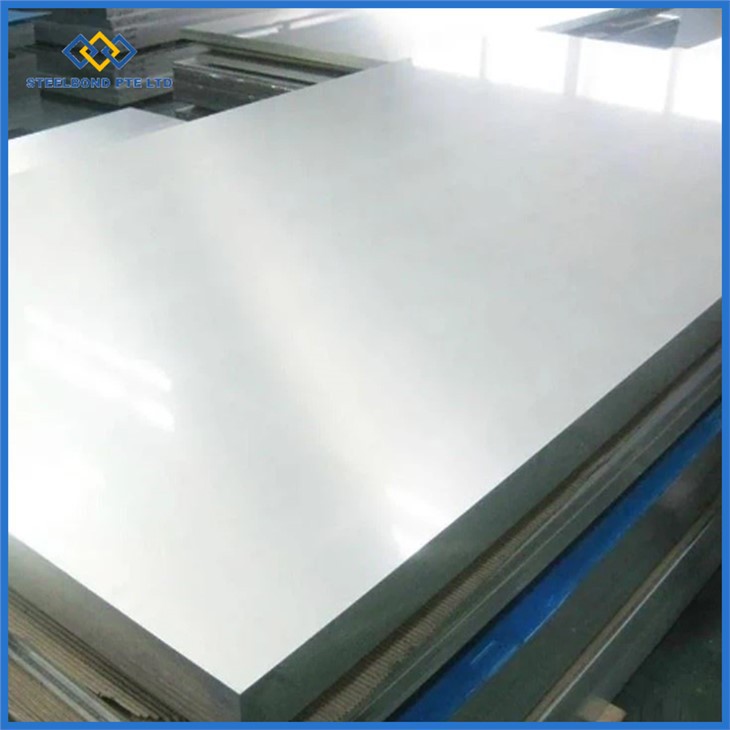
Steel is one of the most important materials for the construction of new passenger and merchant ships and yachts, as well as for repairs and conversions.
Why Choose Us
Strong production chain
We have a strong supply chain with major distributors in China and other Asian regions to meet the stringent requirements of your project.
Professional team
STEELBOND PTE LTD has the most professional quality assurance team to ensure that AML and technical requirements are met, while providing quality products and services on time at the most competitive prices.
High-quality products
Committed to providing high-quality products and services efficiently, ensuring project safety, and making the world know more about Chinese steel.
Product diversification
The main inventory includes pipes and bars of stainless steel, duplex stainless steel, super duplex stainless steel, nickel alloy, Hastelloy and other grades.
Types of Shipbuilding Steel Plate
General strength steel for hull structures
Divided into four grades: A, b, c and d according to quality grade, of which grade a is the lowest grade and grade d is the highest grade. The yield strength (not less than 235n/mm2) and tensile strength (400~520n/mm2) of these four grades of steel plates are the same, but the impact energy at different temperatures is different. General-strength hull structural steel is mainly used to manufacture hulls, decks and other parts of ocean-going, coastal and inland navigation ships.
High-strength steel for hull structure
This kind of steel plate refers to a steel plate with a yield strength higher than that of general strength steel for hull structure. It is divided into multiple strength grades such as ah32, dh32, eh32, ah36, dh36, and eh36 according to the minimum yield strength. Each strength grade is divided into four quality grades a, d, e, and f according to different impact toughness. For example, ah32 represents high-strength hull structural steel with a yield strength of not less than 315n/mm^2 and an impact toughness that reaches class a standards at 0°c. High-strength hull structural steel is mainly used to manufacture hull parts that need to withstand large loads and harsh environments, such as large ocean-going carriers and offshore engineering platforms.
Low-temperature toughness steel
This kind of steel plate refers to a steel plate that still has good toughness under low-temperature conditions. It mainly improves low-temperature toughness by adding ni and other alloying elements to the steel. Low-temperature toughness steel is divided into multiple grades according to the ni content, such as 0.5nia, 0.5nib, 1.5ni, 3.5ni, 5ni, 9ni and so on. Low-temperature toughness steel is mainly used to manufacture hull parts that need to work in low-temperature environments, such as polar transport ships and liquefied natural gas (lng) transport ships.
Stainless steel plate
This kind of steel plate refers to a steel plate with high corrosion resistance. It mainly improves corrosion resistance by adding cr, ni and other alloying elements to the steel. Stainless steel is divided into two categories: Austenitic stainless steel and duplex stainless steel according to different organizational forms. Austenitic stainless steel has good plasticity and welding properties, but poor durability properties; duplex stainless steel has good durability properties and corrosion resistance, but poor plasticity and welding properties. Stainless steel is mainly used to manufacture hull parts that require corrosion resistance, such as chemical carriers and desalination equipment.
Application of Shipbuilding Steel Plate
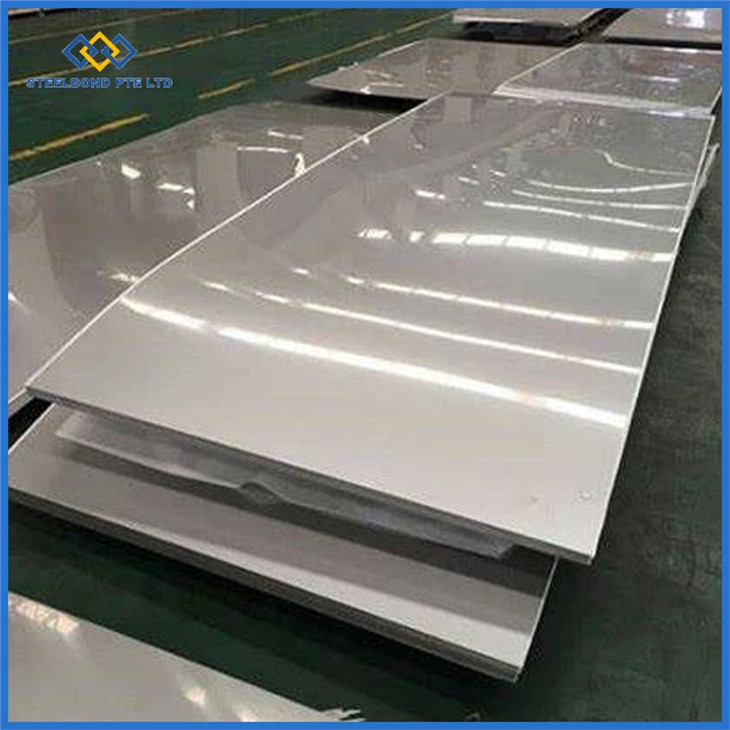
Construction
Shipbuilding steel plate play a versatile role in the construction industry. They’re particularly common in the construction of bridges, building, and warehouses. They’re also used for building large commercial structures like airports and sports arenas. Shipbuilding steel plates are used to help make building foundations stronger and to provide foundational support to bridges. They’re also an essential component of most pre-fabricated homes, including the new, trendy “tiny houses.”
Military
Military buildings and vehicles are often fortified with the help of shipbuilding steel plates. They’re common in jeeps, tanks, trucks, helicopters, jets, and ships used for military purposes. They’re also used to test the strength of weapons and bullets. All branches of the military use shipbuilding steel plate in some fashion.
Ship construction
Easily welded and ultra-strong, shipbuilding steel plates are used in a significant number of ships and are probably one of the most commonly used materials in ship building. They’re also a key component of many oil rigs and in offshore construction. Their corrosion resistance makes them ideal for these applications.
Pressure vessels
Pressure vessels like gas tanks and boilers, which need to protect against leaks and extreme temperatures, are frequently made of shipbuilding steel plate. Oftentimes, these shipbuilding steel plates are specifically engineered to be able to hold gas or fluid contents at different temperatures to reduce the risk of explosion.
Shipping
Large shipping containers are commonly built using shipbuilding steel plate. Shipbuilding steel plate help preserve the life of these shipping containers due to their corrosion and rust resistance, and they are strong enough to protect all different types of cargo.
Oil and gas
In addition to being used for construction of rigs, many oil and gas pipelines use shipbuilding steel plate to maximize their strength and ensure they last longer without corroding. Shipbuilding steel plate can easily be welded to suit the needs of pipelines and can also be used for repair purposes when parts of pipelines need to be patched up.
Household appliances
You probably weren’t aware of this, but shipbuilding steel plates are even used to build your household refrigerators and dishwashers. In refrigerators, shipbuilding steel plates are beneficial because they help the appliance hold its temperature and are unlikely to rust even after years and years of use.
Automotive industry
Shipbuilding steel plates are found in many cars on the road today. Due to their strength, they’re essential in keeping drivers and passengers safe in the event of accidents. They can also be relatively light in weight in comparison to other materials of their strength, which means they help improve the fuel economy of cars.
Road work
In addition to being used in almost every other area of construction, shipbuilding steel plates are also used for road work projects. Skid-resistant, steel road plates can be a viable and temporary fix to place over holes and other compromised areas of road to allow road traffic uninterrupted access to those areas during construction projects and road repair projects.
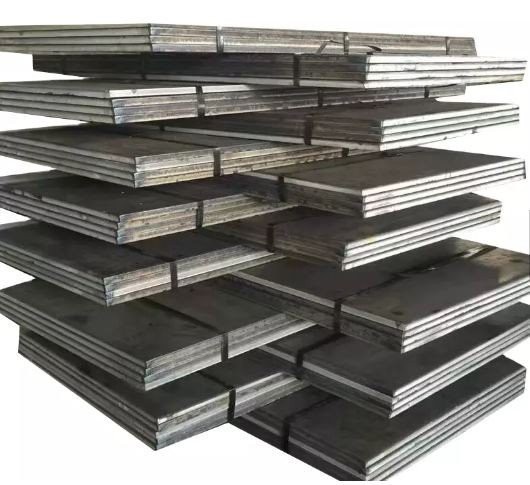
Grade A
Bulkheads and other ship constructions with less than 20 mm thickness are made of this mild steel.
Grade B
Structures measuring 20 to 25 mm incorporate this slightly stronger steel.
Grade D
For structures that are thicker than 25 mm, grade D steel is recommended since it has the strength to withstand cracking.
Grade E
This grade of steel is utilised for constructions of 50 mm or larger and is heat treated for maximum strength, making it the perfect material for high-stress areas of the ship, such as the keel.
Arctic D
Icebreakers frequently employ this unique grade, which is designed to remain firm even at very low temperatures.
How to Choose a Shipbuilding Steel Plate
Quality
The quality of the shipbuilding steel plate is one of the most important factors to consider. Make sure to select high-quality materials that meet or exceed industry standards, such as those specified by classification societies like abs, dnv gl, bv, lr, ccs, etc.
Composition
Different grades of shipbuilding steel plate have different chemical compositions, with varying levels of carbon, manganese, silicon, sulfur, phosphorus, and other elements. Ensure that the composition of the steel you select is appropriate for your specific application.
Strength
Shipbuilding steel plates come in various grades with different strength levels. Consider the strength required for your application and select a steel grade that meets your needs.
Thickness
The thickness of the shipbuilding steel plate is also an important consideration. Ensure that the thickness selected provides adequate strength and durability for the application.
Weldability
Some shipbuilding steel plates may have low weldability due to their chemical composition or manufacturing process. If welding is required, make sure to select a steel grade that has good weldability.
Surface condition
Check the surface condition of the shipbuilding steel plate before purchasing to ensure that it is free from defects, such as cracks, pitting, or roughness.
Price
Price is always a factor to consider when selecting ship plate steel. However, do not compromise on quality or performance for the sake of saving costs. Select a reputable supplier that provides high-quality materials at competitive prices.
Precautions for the welding process of shipbuilding steel plate
The DNV GL grade B shipbuilding steel plate should be welded strictly in accordance with the process specification, and the welding heat input is generally controlled below 5000J/cm. If the heat input is too large, the weld metal will stay at a high temperature for a long time, which will cause the heat-affected zone to overheat and make the grains coarse, make the structure plasticity worse, and reduce the crack resistance of the joint; while the heat input is too small, it will cool the joint The speed is increased, the cooling time is shortened, and the heat-affected zone is hardened, which is also not conducive to the escape of hydrogen, so it also increases the tendency of cold cracking. Therefore, the welding heat input should be strictly controlled during construction.
The welding environment of shipbuilding steel plates should be stable to avoid air flow affecting the gas protection effect. Try to avoid welding in a humid environment. Because of the multi-pass welding, the splash cleaning between layers must be thorough. Before welding on the back, use gouging to thoroughly clean the roots, grind the grooves, and clean them before welding.
Visual inspection
The surface of the weld should be flat and smooth, the width of the weld should be the same, and the extra height should meet the process requirements. The surface of the shipbuilding steel plates is to be free of defects such as pores, cracks, undercuts, etc.
Non-destructive testing
Use magnetic powder to inspect the weld surface and near-surface defects. Then use ultrasonic to inspect the weld. Subsequently, the welds were inspected by X-ray filming.
Defect treatment
If pores, cracks, and other excessive defects such as slag inclusions, undercuts, lack of fusion, etc. are found during the inspection of the ship steel plate, the defective parts shall be batch removed. The collection should be polished and cleaned before welding.
Company Introduction
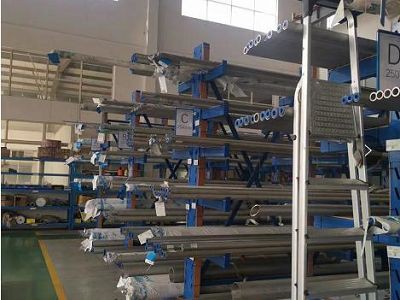
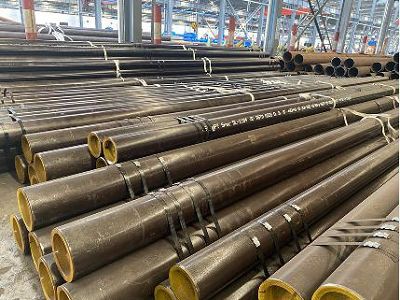
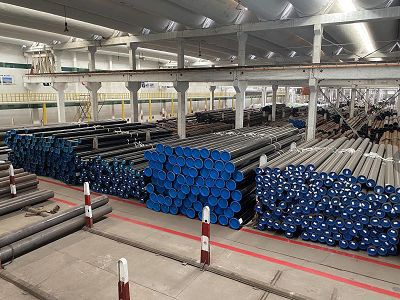
STEELBOND PTE LTD is a leading steel distributor established in 2014 in Singapore, we offer a diverse range of ferrous and non-ferrous products from reputable and accredited mills and We have a strong supply chain with major stockists in China and other Asia area to meet the Stringent requirement with your project.
Driven by its customer-focus value, STEELBOND PTE LTD has consistently applied innovative and best-practice processes to give its clients reliable products and on-time services.

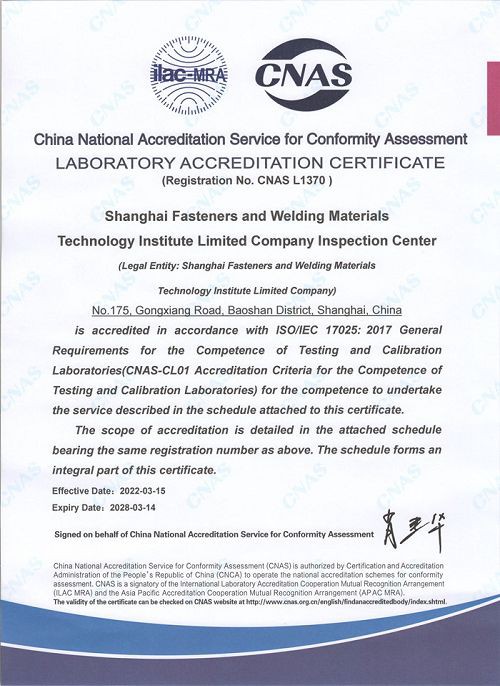
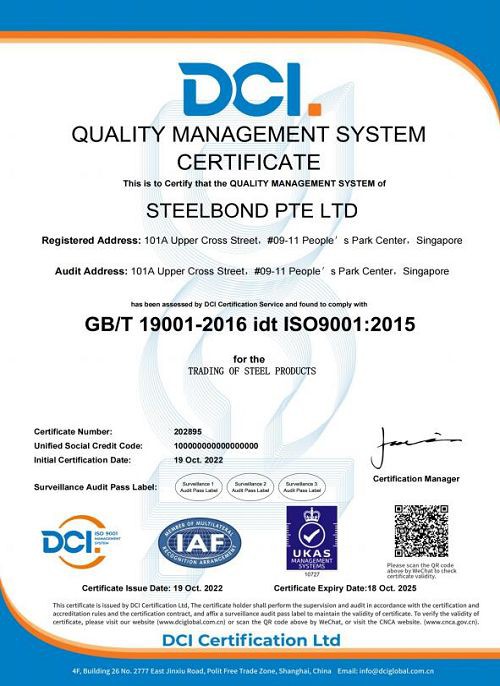
Our Certificate

FAQ
Q: What steel plate is used in shipbuilding?
Q: What is ship building steel?
Q: What grade is shipbuilding steel plate?
Q: What is a ship plate?
Q: Which metal is used in shipbuilding?
Q: What is the best steel for ship building?
Q: What grade of steel is used in shipbuilding?
Q: What kind of steel is used in ships?
Q: What is the standard steel section used in shipbuilding?
Q: Is stainless steel used in shipbuilding?
Q: What is marine grade steel plate?
Q: How thick is the steel on a ship?
Q: What is plate in steel?
Q: What is plating in ship?
Q: What is the most commonly used material for shipbuilding?
Q: Why are ships not made of stainless steel?
Q: What are the advanced materials in shipbuilding?
Q: Which metal is used for ship building?
Q: What grade of steel is used in ship building?
Q: What are the steel profiles for shipbuilding?
Hot Tags: shipbuilding steel plate, China shipbuilding steel plate manufacturers, suppliers, factory
Send Inquiry
Tell us the grade, size and quantity you need — we reply within 24 hours.